Meadow Hill Open House, Sunday, October 25, 2026, 2–5 PM
Download the Meadow Hill Open House PDF

Mark your calendar. Join us at Meadow Hill to tour the historic house and see ongoing research on finds from a French camp of the American Revolution and from the Civil War. The Caroline Historical Society will visit from 3–5 PM; everyone is welcome.
- When: Sunday, October 25, 2026, 2:00–5:00 PM
- Location: 8252 Fredericksburg Tnpk., Woodford, VA 22580
- Society visit: Caroline Historical Society, 3:00–5:00 PM
- What you’ll see: The historic house and Revolutionary War and Civil War research
- Refreshments: Light treats, tea, coffee, and water
- Get involved: Volunteer openings at Meadowview, and where donations are needed next
- Contact: Dr. Phil Sheridan, 804-633-4336
- Flyer: Download the Meadow Hill Open House PDF
Celebration of the White-tops, October 11, 2025, 10-4
Come celebrate the white-topped pitcher plant at Meadowview, view the collection, tour the Central VA Preserve, Donate for our conservation work, and purchase selected plants from our collection. This is our big fall fund-raising event and we look forward to seeing you there.
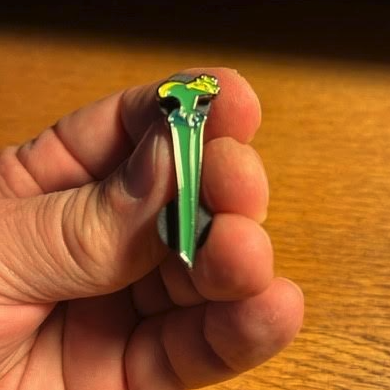
Support Conservation Efforts with Meadowview: Get Involved, Get a Pin!
Meadowview is excited to announce that we are now offering Meadowview pins as a special gift for members contributing $50 or more!
Join us in our mission to preserve pitcher plants! We're hosting a major fundraiser on GoFundMe to pay off Wilson note on the Central VA preserve. Your support is vital, and donors will receive a Meadowview pin as a token of our appreciation!
Support the Cause on GoFundMe: Donate Now to Preserve Central VA with Meadowview!
Joseph Pines Preserve Update
Meadowview closes on Game Lake addition to Joseph Pines Preserve. In late November, 2020, Meadowview closed on the purchase of the 195 acre Game Lake tract addition to Joseph Pines. This purchase expands the preserve to 427 acres, all permanently protected under conservation easement with the Virginia Dept. of Forestry. Read more
Giving season is here!
Our greatest need is for the Central VA Preserve and General membership to support our high operating costs in the holiday season (real estate taxes, almost $4000, general liability insurance $1400, and car insurance at $1200). Have a Happy and Safe holiday.
You can make donations here.
"Conefest" at the Center for Biodiversity at Joseph Pines Preserve
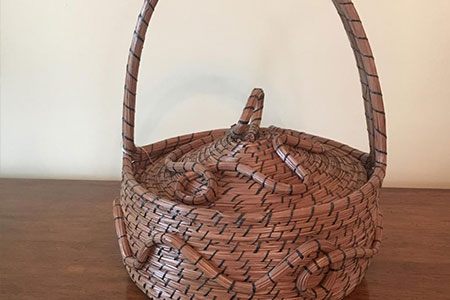
"Conefest" at the Center for Biodiversity at Joseph Pines Preserve, 10/19, 10-4. Longleaf pine basket weaving class (limited to 10, $45/person, payment due 10/5), tours of facility and native plant propagation, tours of Joseph Pines Preserve, native VA longleaf pine cone harvest. Contact Dr. Phil at meadowview@pitcherplant.org.
Celebration of the White-tops
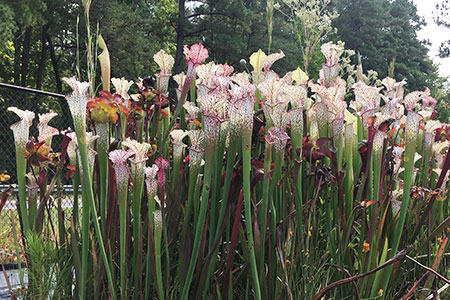
"Celebration of the White-tops" at MV headquarters on 10/12, 10-4. Music, art and plants for sale, tours of the nursery and northern-most native pitcher plant bog on the Central VA Preserve. Questions? Contact Dr. Phil at meadowview@pitcherplant.org.
Open House at Meadowview (2019)
We are going to have an Open House at Meadowview headquarters on May 11, 2019 from 10:00 AM to 4:00 PM. Mark your calendar! This will be one of our big fund raisers for conservation for the year. You'll be able to buy plants, tour the Central VA Preserve, see our operation and much more. Hope you can make it. In the fall we'll celebrate "Conefest" at Joseph Pines Preserve.
Upcoming Plant Shows
May 03-04, 2019 - Lewis Ginter Botanical Garden in Richmond, VA
May 18, 2019 - Greensprings Garden Park in Alexandria, VA
News Flash: Joseph Pines
Virginia Land Conservation Foundation awards Meadowview $175,000 to double size of Joseph Pines. Donors needed to complete acquisition. Read the Full Application
Donor Weekend at Joseph Pines (2018)
March 24, 1-5 PM & March 25, 10-3
We invite you to attend an Open House at our Center for Biodiversity and Joseph Pines Preserve. You will see our amazing, restored longleaf pine/pitcher plant ecosystem on our 232 acre preserve and supporting facilities and operations at the Center for Biodiversity. We are soliciting donors to help match our recent Virginia Land Conservation matching grant of $175,000 to purchase an adjoining 190 acres and will be explaining and showing that conservation effort. RSVP requested. Contact meadowview@pitcherplant.org or call 804-633-4336. Meet at the Center for Biodiversity located at 22515 Cabin Point Rd., Disputanta, VA 23842.
Check out the event on the Meadowview Facebook page.
#GivingTuesday on 28 November 2018
#GivingTuesday is a global day of giving fueled by the power of social media and collaboration. On November 28 to kick-off the charitable season, please donate to meadowview via our Donate page.
To learn more about #GivingTuesday visit their website and use their Add to Calendar feature to place a reminder on your calendar.
Fall 2017
Plant Shows
Green Springs Fall Plant Sale
Saturday September 9th 2017
Information found at fairfaxcounty.gov
Lewis Ginter Fall Plant Fest
Fri-Sat September 15th-16th 2017
Information found at lewisginter.org
Arborfest at Blandy Experimental Farm/ State Arboretum
Sat-Sun Oct 14th-15th 2017
Information found at blandy.virginia.edu/
Fall 2016
NEW! Bulk/Wholesale Pricing!
NEW! Bulk/wholesale pricing on select Sarracenia! $6 per plant for Meadowview Supporting members! Available while supplies last! Wholesale/Bulk rates: $6 per plant if you order 10 or more plants and are a supporting Meadowview member! $12 per plant without a membership.
Fall 2016
Plant Shows
We are selling plants at events every weekend for the rest of September. Come visit us at the following THREE events! Hope to see you!
Fall Garden Day at Greensprings
Saturday, September 10, 9:00 am-3:00 pm.
Address: Green Spring Gardens, 4603 Green Spring Road, Alexandria, Virginia 22312
Fall Plant Fest at Lewis Ginter Botanical Garden
Friday Sept. 16th 9am -5pm and Saturday, Sept. 17th 9am-3pm
Address: Lewis Ginter Botanical Garden, 1800 Lakeside Avenue, Richmond, Virginia 23228
Fredericksburg Dog Mart, Dog show
Saturday Sept. 24th 9:30am-4:00pm
Address: Fredericksburg-Rappahannock Chapter Park, 12400 Herndon Road, Spotsylvania, VA 22553
May 2016
Community GIVE
A BIG thanks to all of our donors for making the Community Give a huge success. You donated a total of $14,850, and as of this writing, we will receive a $500 prize (we’re still waiting to hear about some other prizes, like the endowment). Not only were we successful in fundraising, but the Community Foundation exceeded their goal of raising over $1,000,000 for regional non-profits.
Thank you for your patience with the computer glitches on Give day. This is something we hope we won’t experience again, but we made it through successfully. The money raised from the Community Give will be spent as follows: $6000 for the note on Joseph Pines Preserve in Sussex County, $5000 for the used Polaris Ranger for preserve management, and $3850 for the note on the Central Virginia Preserve in Caroline County.
Meadowview Community GIVE results.
February 2016
Meadowview CP Social and Open house
We would like to invite any and all who are interested to attend our carnivorous plant social and open house on Saturday March 19th, 2016 at Meadowview Biological Research Station!
Please RSVP on the event listing on Facebook
February 2016
Preserve Manager Job Available
We have posted a great paid opportunity for a Preserve Manager that would be overseeing the Joseph Pines Preserve in Sussex County, Virginia. The position will start August 2016
View the positon here
September 2015
Donate Items to Meadowview
There are items that you can donate that would help Meadowview. We are looking for a good, used economy car that gets high mileage; a pressure washer; basket trailer; dump trailer; weed whackers, and Side by side 4 wheeler for preserve managemen.
July 2015
The Cameron Foundation Grant
The Cameron Foundation Awards Meadowview $35,000 grant to fund preserve manager and finish second floor educational facility at Center for Biodiversity at Joseph Pines Preserve.
July 2015
Fall Plant Sales
Meadowview will be paricipanting in Fall plant sales at Lewis Ginter Botanical Garden and Green Springs Garden Park. More information soon.
May 2015
2015 Community Give
Thanks to all those that supported Meadowview during the 2015 Community Give.
March 2015
Restoration Ecologist Internships
Meadowview has three Restoration Ecologist Internship positions available. They run from May 18 through July 31, 2015 and come with a monthly stipend of $250, free lodging at the Center or headquarters, and garden privileges from the intern vegetable garden.
View and Apply for the positions on our Job Openings page.
February 2015
2015 Online Catalog
The Online Catalog has been updated with the prices and items for Spring 2015.
For more information please visit the Online Catalog.
December 2014
2014 Meadowview Winter Newsletter
Read the Winter 2014 Holiday Issue. Topics discussed in this newsletter include:
-
- The Center for Biodiversity Purchased at Joseph Pines Preserve!!!
-
- Propagation Efforts
-
- Recent grants and donations
-
- We're "Small But Mighty" in the Community Give
-
- Improvements in Meadowview Infr astructure
-
- Job Openings
Read the newsletter here.
November 2014
Gift Meadowview a Donation this Holiday Season!
Meadowview needs your donations and winter is a great time to donate. Please find the donation button below:
September 2014
Center for Biodiversity at Joseph Pines Preserve
Meadowview has successfully purchased the Center for Biodiversity at Joseph Pines Preserve. We would like to thank the Mary Morton Parsons Foundation and the Union First Market Bank for the mortgage loan.
Grand Opening
October 11, 2014
9:00 a.m. - 4:00 p.m.
22515 Cabin Point Rd. Disputanta, VA 23842
Includes tour of facility, proposed layout of grounds, and preserve tour
May 06 2014
The Mary Morton Parsons Foundation
Meadowview has received a letter from the Mary Morton Parsons Foundation awarding us a $50,000 challenge grant towards the purchase of the $449,000 Schwartz tract education and biodiversity center at Joseph Pines Preserve. Only $400,000 more needed to purchase the property. This match must be made within one year.
Help Us Do Some Crowd Fund Raising
YOU CAN MAKE DONATIONS TO THE LEFT
Crowd fund raising for the Center for Biodiversity at Joseph Pines Preserve is May 6. We're enrolled under the Community Foundation of the Rappahannock River Region.
Please visit the Community Give website for more information and donations can be completed below.
For matching donations to the Mary Morton Parsons Foundation grant please use the "Donate" button below:
All donations to the Community Give on May 6 go to match the Mary Morton Parsons Foundation grant. The link to donate on May 6 for Meadowview is:www.bit.ly/MeadowviewGIVE14. General information about the event is found at: www.thecommunitygive.org
March 2014
Winter 2014 Newsletter
Please read the Winter 2014 Newsletter. This newsletter includes information about:
- The $50K challenge grant awarded for The Center for Biodiversity at Joseph Pines Preserve
- The new propagation beds, signage, and restoration occurring at Meadowview Headquarters
- The conservation easement placed on Central Virginia Preserve
- The two new additions to the Board of Directors
- The new intern that will be joining us in Spring
- The Future of Meadowview
Download the PDF.
February 2014
Department of Environmental Quality
We received a letter from the VA Dept. of Env. Quality State Water Control Board on Friday authorizing our $449K loan for the biodiversity center at Joseph Pines Preserve. The loan is contingent on donor or foundation support. A good start is our $50K challenge grant for this project from the Mary Morton Parsons Foundation. This is an excellent place to donate if you, or anyone you know, wants to make an end of year donation.
For more information please read this document.
December 2013
The Mary Morton Parsons Foundation
Meadowview has received a letter from the Mary Morton Parsons Foundation awarding us a $50,000 challenge grant towards the purchase of the $449,000 Schwartz tract education and biodiversity center at Joseph Pines Preserve. Only $400,000 more needed to purchase the property. This match must be made within one year.
For more information please read the letter.
September 2013
Dear Members and Friends of Meadowview:
Thank you for your support and interest in the work of Meadowview Biological Research Station. Please take a look at our fall 2013 newsletter to read some of our accomplishments and activities this year. We’ve got even more to tell you about in upcoming newsletters and I think you will agree this is an exciting time for Meadowview. We really need your financial support for the upcoming winter. The continued growth and success of Meadowview has resulted in increased operating costs. Our working funds are largely provided by plant sales and revenue in that arena has remained level. Your support, therefore, is even more important to sustaining our organization, especially over the lean fall and winter months. We’re hoping to raise $5000 in member donations to cover operating expenses over the winter. Please think of us in your charitable giving and let others know who might want to help. You can donate online.
Both of our nature preserves continue to grow in scope and size and are playing a dominant role in protecting endangered pitcher plants and their associates in Virginia. We were able to perform a prescribed burn in May on 200 acres of the Joseph Pines Preserve. This burn included 100 acres of the recently acquired Posey tract and we are looking forward to the new bog habitat that will be available for reintroduction of rare species.
We invite you to schedule a visit to see our headquarters, National Sarracenia Collection, or preserve system. Please let me know if you have any questions and thank you again for your support.
Sincerely,
Phil Sheridan, Ph.D.
Director Meadowview Biological Research Station
July 2013
Joseph Pines Preserve Tours 2013
Come join us for guided tours of the last great refuge for native pitcher plants in Virginia at the Joseph Pines Preserve in Sussex County. The preserve represents an aggressive attempt at restoring an indigenous longleaf pine/pitcher plant ecosystem through an ambitious reintroduction effort.
July 15, 10:30 A.M.
Learn more about these tours.
June 2013
JOIN US FOR CROSS FEST
Saturday June 29, 2013
Bowling Green Town Hall in Caroline County, Virginia
The waterwheel plant is a globally rare carnivorous plant and our keynote speaker, Adam Cross, will talk about his research with this species. Adam has published a new book on Aldrovanda which will be available for sale at the event. Presentations will also be given by Mason McNair and Jacobo Rozo on Searching for Carnivorous Plants in North Carolina. There will be vendors, a Central Virginia Preserve Tour, an evening social, and more.
Learn more about this even and register.
June 2013
Carnivorous Plants of Western Australia | Talk by Christian Dietz and Claus-Juergen Lenz
Join us for a talk by Christian Dietz and Claus-Juergen Lenz about their trip to Western Australia in 2011. They will lecture about the carnivorous plants they observed including tuberous and pygmy Drosera (Drosera tubaestylis, D. zonaria, D. stolonifera, D. pulchella, D. scorpioides, D. gigantea), Utricularia (Utricularia menziesii, U. inaequalis, U. multifida, and U. tenella), and Cephalotus. They will also show some pictures of the amazing landscapes, animals, and other plants.
The talk will be held at the headquarters of Meadowview Biological Research Station at 8390 Fredericksburg Tnpk. Woodford, VA 22580 at 3:00 P.M. on Friday June 14, 2013. Refreshments and snacks will be provided after the lecture. Space is limited so reservations are required to attend the talk. Contact Dr. Phil Sheridan at meadowview@pitcherplant.org or phone 804-633-4336.
If you can't join us in person; this talk will be streaming live on this page at 3:00 pm EST 14 June.
Learn more about this event
June 2013
Carnivorous Plants of Western Australia | Talk by Christian Dietz and Claus-Juergen Lenz
Join us for a talk by Christian Dietz and Claus-Juergen Lenz about their trip to Western Australia in 2011. They will lecture about the carnivorous plants they observed including tuberous and pygmy Drosera (Drosera tubaestylis, D. zonaria, D. stolonifera, D. pulchella, D. scorpioides, D. gigantea), Utricularia (Utricularia menziesii, U. inaequalis, U. multifida, and U. tenella), and Cephalotus. They will also show some pictures of the amazing landscapes, animals, and other plants.
The talk will be held at the headquarters of Meadowview Biological Research Station at 8390 Fredericksburg Tnpk. Woodford, VA 22580 at 3:00 P.M. on Friday June 14, 2013. Refreshments and snacks will be provided after the lecture. Space is limited so reservations are required to attend the talk. Contact Dr. Phil Sheridan at meadowview@pitcherplant.org or phone 804-633-4336.
If you can't join us in person; this talk will be streaming live on this page at 3:00 pm EST 14 June.
Learn more about this event
March 2013
Crossfest 2013!
Join us for a symposium on the ecology and cultivation of the waterwheel plant, Aldrovanda vesiculosa, at Bowling Green Town Hall in Caroline County, Virginia on Saturday June 29, 2013. The waterwheel plant is a globally rare carnivorous plant and our keynote speaker, Adam Cross, will talk about his research with this species. Adam has published a new book on Aldrovanda which will be available for sale at the event. Additional speakers are invited to present at the symposium. The event will also focus on the efforts of Meadowview Biological Research Station to preserve the northern most pitcher plant bog in Virginia at the Central Virginia Preserve. Tours of the preserve will be available.

Learn more about this event
March 2013
2013 Nepenthes Tours
Stewart McPherson has organized three Nepenthes expeditions to take place in 2013.
The expeditions are excellent value, and professionally organised with first class logistics, food and expert Nepenthes guides. The expeditions also raise funds to support Meadowview Biological Research Station and the Ark of Life rare Nepenthes collection to further conservation of endangered Nepenthes species. So your participation will directly support the conservation of rare carnivorous plants.
Learn about this opportunity.





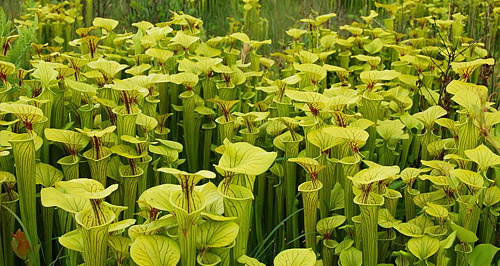

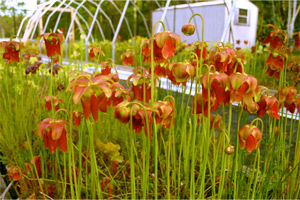 known as pitcher plant bogs or seepage wetlands. Bogs are acidic, nutrient poor wetlands which are characterized by a unique assemblage of plants and animals. Many bogs have been lost in Maryland and Virginia through drainage, development or neglect and most of the plants found in these sites are threatened with extinction.